Discover the best AI platforms to optimize website ranking with AI algorithms. Explore top tools like Profound, Surfer, and BrightEdge for enhanced visibility.

Search is changing, and AI algorithms are now a big part of how websites rank. If you want your site to show up where people are looking, you need to pay attention to these new tools. They help you understand how AI sees your content and where you can improve. This article looks at some of the best platforms out there that use AI to help you get your website ranking better.
Key Takeaways
AI algorithms are changing website ranking, making AI visibility tools important for SEO.
Tools like Profound and Rankscale help track brand mentions and citations in AI search results.
Surfer and Writesonic offer features for both traditional SEO and AI content optimization.
BrightEdge and OmniSEO® provide broad AI visibility monitoring and recommendations.
Understanding how AI engines evaluate and cite brands is key to improving rankings.
1. Profound
Profound is a pretty serious player when it comes to understanding how your brand shows up in the new world of AI search. It's not just about traditional SEO anymore; this platform focuses on what they call AI visibility. Think of it as keeping an eye on how AI models like ChatGPT and Perplexity are talking about you and your content.
They capture real user interaction data across more than 10 different AI engines. This means you get to see exactly how people are finding information and how your brand fits into those answers. It's all about making sure you're seen and heard in these rapidly evolving AI-driven search results.
Here’s a quick look at what Profound helps you do:
Track Brand Mentions: See where and how often your brand is cited in AI-generated answers.
Analyze AI Sentiments: Understand the tone and context of how AI models discuss your brand and keywords.
Benchmark Competitors: Compare your AI visibility against others in your industry.
Identify Trends: Spot patterns in languages, topics, and regions where your brand appears.
Profound also offers features like Query Fanouts, which shows how AI models turn prompts into search queries, and the Profound Index, a leaderboard for AI visibility. They even have a WordPress plugin now, which is neat if you're running a site on that platform. It's a tool built for teams that need detailed insights into AI search performance, especially if you're in a regulated industry or handle multilingual content. They've also secured significant funding, which shows they're serious about developing this space. You can check out their AI visibility platform for more details on how they help businesses stay ahead.
The shift to AI-powered search means that how your content is presented in AI answers is becoming just as important as traditional search rankings. Profound aims to give you the data you need to manage this new frontier effectively.
2. Rankscale
Rankscale is a platform that helps you see how visible your brand is across different AI search engines. Think of it like a dashboard for your brand's presence in the new world of AI search. It's designed to give you a clear picture of where you stand and what you can do to get noticed more.
This tool focuses on something called Generative Engine Optimization, or GEO. Basically, it's about making sure your content and brand show up well when AI systems like ChatGPT or Gemini are answering questions. It's a bit different from traditional SEO because AI looks at information in its own way.
Here’s what Rankscale can help you with:
Tracking your brand's mentions: See how often AI tools talk about your brand and in what context.
Analyzing citations: Figure out which websites AI is pulling information from to answer queries about your brand. This helps you understand your content's influence.
Benchmarking against competitors: See how your AI visibility stacks up against others in your industry.
Getting content recommendations: Receive suggestions on how to adjust your content so AI systems are more likely to reference it.
The platform provides a centralized dashboard where you can monitor all these key metrics over time. It uses interactive graphs to show trends, making it easier to spot what's working and what's not. If you're looking to understand and improve your brand's footprint in AI-driven search, Rankscale offers a straightforward way to do it. It's a good option for businesses wanting to get a handle on AI search optimization without getting too bogged down in technical details. They also offer custom pricing, which can be helpful for different business sizes.
3. OmniSEO®
Okay, so let's talk about OmniSEO®. If you're feeling a bit lost with how AI is changing search, you're not alone. Traditional SEO is still a thing, but it's definitely not the whole story anymore. AI search engines are popping up everywhere, and they're showing information in new ways, like those AI Overviews you see on Google. OmniSEO® is designed to help you figure out where your brand shows up in these AI-generated answers.
Think of it like this: instead of just aiming for a spot on the first page of Google, you now need to worry about being mentioned or cited in an AI's response. OmniSEO® helps track that. It's a tool that looks at how your content appears across different AI platforms, including things like ChatGPT and Perplexity. It's pretty neat because it gives you a look at your visibility beyond just the standard search results.
Here’s what you can get from using a tool like OmniSEO®:
See where your brand appears: It tracks mentions and citations across various AI search engines.
Understand competitor visibility: You can see how your competitors are showing up in AI results, which is super helpful for planning.
Get recommendations: It doesn't just show you data; it offers advice on how to improve your AI search presence.
Track traffic and strategy: It helps connect your AI visibility efforts to your overall SEO strategy and potential traffic.
It's a free tool, which is a big plus, especially if you're just starting to get a handle on this new AI search landscape. They combine their software with actual people who can help you make sense of the data and give you custom advice. It’s a good way to make sure you're not missing out on potential customers who are searching in these new AI spaces. Adapting to this AI-driven search environment is essential for continued relevance and audience reach [18bc].
The way people find information online is changing fast. AI is making search different, and if you're not paying attention, you might be missing out on a lot of potential visibility. Tools like OmniSEO® are built to help you keep up with these shifts and make sure your business can still be found.
4. Surfer
Surfer started out as a tool for traditional SEO, really digging into what makes content rank on Google. Now, they've expanded to help with AI search too. It’s kind of like they took their existing knowledge about what works for search engines and applied it to how AI answers questions.
One of the cool things Surfer does is its Topical Map. This feature shows you what topics your website already seems to be an authority on. It’s helpful because AI tools often look at a website's credibility in a certain area. By covering related topics, you increase your chances of showing up not just in regular search results, but also in those AI-generated answers. You can pick keywords based on how hard they are to rank for and how many people search for them.
Surfer also has an AI Tracker. This lets you see how often your brand is mentioned in AI results, your average ranking position, and an overall score for your brand's appearance. You can even track how you stack up against competitors and see how you show up on platforms like ChatGPT and Perplexity. They also let you track specific prompts that people might type into AI search engines, which is pretty neat for seeing where you stand.
The platform aims to integrate AI optimization directly into your existing workflow. This means you can research, optimize, and track your results for both traditional search engine results pages (SERPs) and AI answers all in one place. It simplifies the process, so you don't have to jump between different tools.
Surfer's optimization score is designed to guide you on using specific information and entities to improve your chances of appearing in AI answers. It's a solid option if you're already using Surfer for your SEO needs and want to extend those efforts into the AI search space. They offer features that help you understand what makes content rank, which is pretty much the core of AI search optimization.
Here’s a quick look at what Surfer offers:
Content Editor: Provides real-time suggestions for optimizing content for both traditional and AI search.
Topical Map: Helps identify areas where your website has authority and suggests related topics.
AI Tracker: Monitors your brand's visibility and ranking in AI-generated results across various platforms.
NLP Analysis: Examines semantic relevance and content quality to improve AI discoverability.
While Surfer is a strong contender, especially for those already in their ecosystem, it's worth noting that some AI visibility tracking features might feel secondary compared to their core SEO product. However, for content creators and SEO teams looking to adapt their strategies for AI search, it's definitely one of the leading AI SEO tools to consider.
5. Writesonic
Writesonic is a pretty interesting platform that’s been around for a bit, mostly known for its AI writing tools. But they’ve really expanded into the SEO space, especially with how AI is changing search. They’re trying to bridge the gap between creating content and making sure it actually shows up when people ask AI chatbots questions. It’s like they saw the writing on the wall – or maybe the AI’s answer – and decided to build tools for it.
What’s cool is that Writesonic doesn’t just help you write. It’s got features designed to help your content get noticed by AI search engines. Think of it as getting your articles ready for the new wave of search. They’ve got this AI-powered approach to SEO that combines a few things: tracking how visible you are, creating content, and then tweaking it based on what the data says. It’s meant to make the whole SEO process a bit simpler by putting these pieces together.
Here’s a quick look at what it offers:
AI Content Generation: You can whip up articles, blog posts, and other content using AI. It’s pretty good for getting a lot of material out quickly.
SEO Optimization Prompts: When you’re creating content, it gives you prompts to help make it more visible to AI search.
Bulk Content Features: If you need to produce a lot of content on different topics, this can be a real time-saver.
Integrations: It plays nice with platforms like WordPress and Shopify, which is handy for publishing.
It’s not perfect, of course. The AI visibility tracking isn’t as deep as some other specialized tools out there. And sometimes, the content it spits out can sound a bit generic, so you’ll definitely want to give it a good edit to make it sound like your brand. But if you’re looking to speed up content production and get a basic handle on AI SEO, Writesonic is worth a look. You can check out their AI-powered SEO solution to see how it works.
The platform aims to make it easier to create content that’s structured for visibility in answer engines. It’s a strong choice for teams that need to produce content quickly and in large volumes, with basic AI optimization needs in mind.
6. BrightEdge
BrightEdge is a pretty established name in the SEO world, and they've definitely kept up with the AI search trend. They've built a whole platform around helping businesses get seen in these new AI-driven search results. It’s not just about tracking where your content shows up, but also understanding why and how it's appearing.
They offer some neat features like AI-driven SEO recommendations and automated content insights. One thing that stands out is their focus on connecting AI visibility directly to business outcomes, which is pretty smart. They also have something called BrightEdge Copilot that helps you tweak your content to do better in AI search.
Here’s a quick look at what they focus on:
Real-time tracking for AI Overviews and other AI search features.
Prompt recommendations to help optimize content.
Identifying keywords that are likely to trigger AI answers.
Discovering which URLs are actually being used in AI summaries.
They use a lot of data, pulling from over a decade of historical context and billions of data points. This gives them a solid foundation for their recommendations. It’s like they’ve got this massive library of what works and what doesn’t in search, both old and new.
If you're a local business, a midsize company, or even a large enterprise looking to get a handle on your visibility across different markets, BrightEdge is definitely worth checking out. They provide a SaaS technology SEO platform designed to boost traffic and conversions through organic search. It’s a tool built for serious SEO work.
7. Otterly.AI
Otterly.AI is a tool that helps you see how your brand shows up in AI search engines. Think about things like ChatGPT, Perplexity, and even Google's AI Overviews. It’s like having a special scout keeping an eye on these new search platforms for you.
This platform is particularly good for keeping tabs on your brand's visibility across various AI answer engines. It automatically monitors where your brand is mentioned and how often. This is super important because AI search is changing how people find information online. Otterly.AI helps you stay in the loop.
Here’s what you can get from using Otterly.AI:
See what people are asking about your brand on AI search.
Track where your website gets links from AI search results.
Understand how AI models like ChatGPT see your brand.
Potentially boost brand mentions and website links.
They’ve also rolled out something called Workspaces, which is meant to make managing and scaling your AI search analytics a bit smoother. It’s all about making it easier to handle your AI-driven search strategies. You can even check out their AI Search Analytics to get a feel for it.
The way search works is shifting, and tools like Otterly.AI are here to help you adapt. It’s not just about traditional SEO anymore; it’s about making sure your brand is seen and understood by these new AI systems. Keeping track of your presence here can make a big difference.
Otterly.AI has been recognized as a G2 High Performer for Answer Engine Optimization, which is a pretty solid nod. They even offer a free trial, so you can test it out before committing. It’s a good way to see if it fits your needs for monitoring AI search performance.
8. Rankability
Rankability is another platform that aims to help you get your content to the top of search results, but it does so with a specific AI-driven approach. It's not just about writing; it's about writing what the AI wants to see. The tool starts by looking at what's already working for your competitors. It digs into their search intent, the keywords they're using, and generally figures out why they're ranking well.
From there, Rankability helps you build a content brief. You can either let its AI draft the whole article for you, making sure it's optimized for search engines, or you can take the suggestions and write it yourself. The platform gives you a "Rankability Score" based on the keywords you include. The more relevant terms you add, the better your score gets. It also shows you the word count and how easy your content is to read.
Here’s a quick look at what Rankability offers:
Competitor Analysis: Understand what your rivals are doing right.
Content Brief Generation: Get a clear roadmap for your articles.
AI-Assisted Drafting: Let the AI write optimized content for you.
Content Optimization: Improve existing pieces with keyword suggestions.
Keyword Research: Find related terms with search volume and difficulty data.
The platform also lets you monitor pages you already have live. Just pop in your main keyword and the page URL, and Rankability will tell you your current score and what it thinks the ideal score should be. This kind of detailed feedback is pretty handy for making sure your content stays relevant and visible in the ever-changing search landscape. It's a solid tool for anyone serious about improving their AI visibility.
Rankability also has a keyword research tool that helps you find terms related to your main topic. You get details like how many people search for them and how hard it might be to rank for them. This helps you cast a wider net and catch more relevant searches.
9. Ahrefs Brand Radar
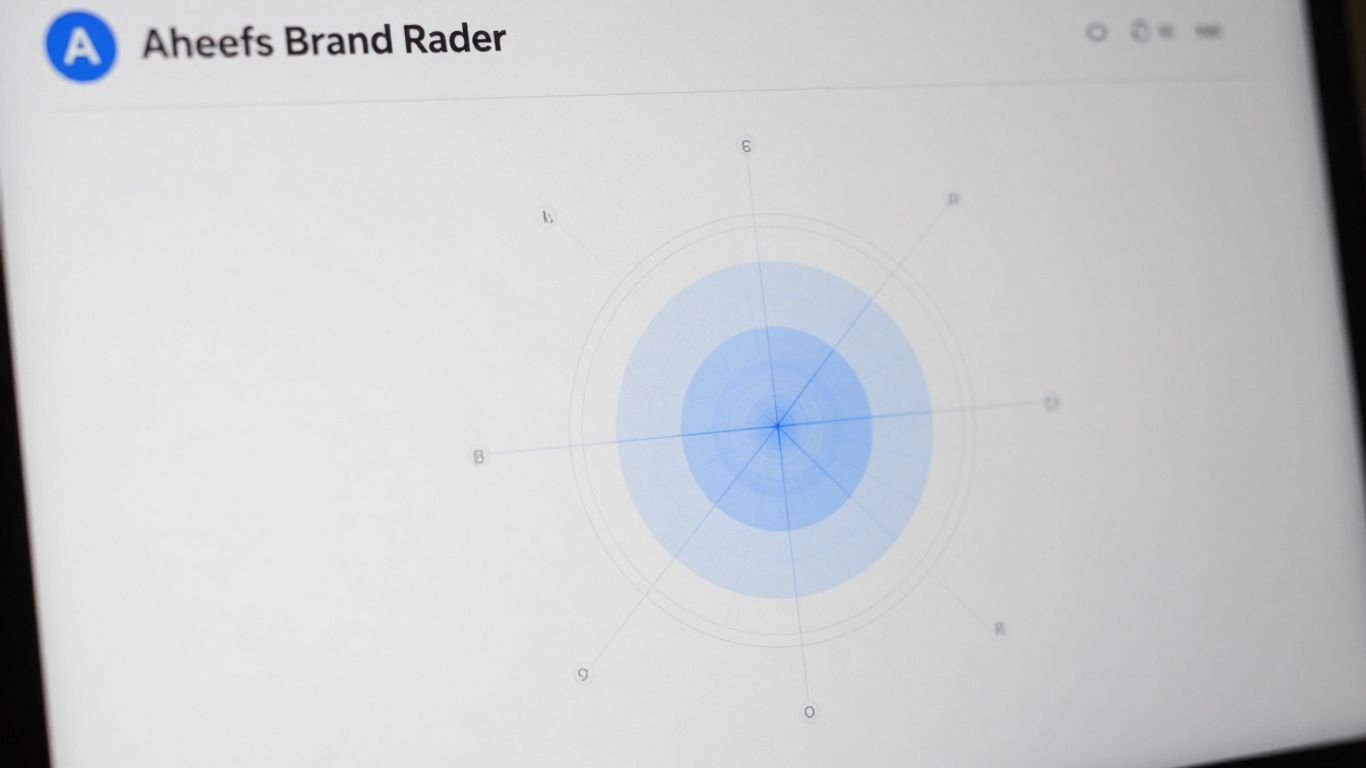
Ahrefs Brand Radar is a tool that helps you keep tabs on how your brand shows up in the world of AI. It's not just about seeing if your name pops up; it's about understanding your visibility across different Large Language Models (LLMs). Think of it as a way to check your brand's pulse in the AI landscape. This tool helps you measure your brand's visibility within popular Large Language Models (LLMs).
It goes beyond simple mention tracking. You get insights into how your brand is perceived and where you might be missing out. This can be super helpful for digital PR efforts and general SEO strategy. You can see what topics and keywords are actually driving traffic to your site from AI searches, which is pretty neat.
Here’s a quick look at what it offers:
Real-time tracking of brand mentions.
Monitoring how competitors' brands appear.
AI-powered filtering to sort through the noise.
Benchmarking your visibility against others in your space.
Understanding your AI presence is becoming more important. Tools like Brand Radar help you see where your brand stands when AI systems are synthesizing information, which is a key part of Generative Engine Optimization.
While it's a paid tool, starting at $188 a month, the insights it provides can be pretty significant for businesses serious about their online presence. It helps identify gaps and opportunities, making it easier to adjust your strategy to keep up with how search is changing. It's a solid option for brands focused on digital PR and those looking for a broad view of their AI presence.
10. Hall
Hall is a tool that focuses on giving content teams quick feedback on how visible their stuff is in AI search results. Think of it as a real-time alert system for your brand's presence. It's pretty neat because it uses these AI citation heatmaps, which basically show you where your content is being pulled from or referenced by AI. This can be super helpful for understanding how AI models are interpreting and using your information.
One of the main selling points for Hall is its Slack integration. If you're already using Slack for team communication, getting alerts directly there makes it easy to stay on top of things without constantly checking another dashboard. It's designed to be a Slack-first experience, which is a bit different from most tools out there.
Here's a quick look at what Hall offers:
Real-time alerting: Get notified instantly about changes in your AI visibility.
AI citation heatmaps: Visualize how AI is referencing your content.
Slack integration: Receive updates and alerts directly in your team's chat.
The biggest strength here is the speed of feedback for content teams. You don't have to wait ages to see if your optimizations are making a difference. However, it's worth noting that Hall currently doesn't pass data through to Google Analytics 4 (GA4). This means you can't directly connect your AI visibility insights with your website traffic data in GA4, which might be a drawback for some users who like to see the full picture.
While Hall is great for immediate feedback and understanding AI citations, its lack of direct GA4 data integration means you'll need to look elsewhere or use separate methods if you want to tie AI visibility directly to website analytics. It's a tool best suited for teams prioritizing rapid AI content performance checks over deep analytical integrations.
Welcome to section 10, Hall! This area is all about understanding how different parts of a system work together. Think of it like a team where everyone has a role to play to achieve a common goal. Learning about these connections can really help you see the bigger picture and how things fit. Want to dive deeper into how our features can benefit you? Visit our website to learn more!
Wrapping Up Your AI Optimization Journey
So, we've looked at a bunch of AI tools that can really help get your website noticed in the new world of search. It’s clear that AI is changing how people find things online, and sticking with old methods just won't cut it anymore. Whether you're a small business owner or part of a big marketing team, finding the right AI platform means keeping up with these changes and making sure your content gets seen. These tools help you see where you stand, what your competitors are doing, and give you ideas on how to improve. It might seem like a lot, but picking even one good tool can make a big difference in how visible you are. Start exploring these options today and get ahead of the curve.
Frequently Asked Questions
What exactly is AI visibility and why does it matter for my website?
AI visibility is all about how often your brand or website shows up when people use AI tools, like ChatGPT or Google's AI answers, to find information. It's super important because more and more people are starting their searches with AI, so if you're not showing up there, you're missing out on potential customers.
How are AI visibility metrics different from regular SEO metrics?
Regular SEO focuses on how well you rank in traditional search results and how many people click on your links. AI visibility, on the other hand, looks at how often AI tools mention or cite your brand in their answers. Since AI answers often give you the information directly without a click, metrics like 'mentions' and 'citations' become more important.
How often should I update my AI visibility benchmarks?
You should check and update your benchmarks at least every three months. AI systems and how they present information change really fast, so what works today might not work tomorrow. Keeping your benchmarks fresh helps you stay on top of these changes.
Which AI tools are most influential in helping people make buying decisions?
Right now, tools like ChatGPT and Google's AI Overviews seem to have the biggest impact on people's buying choices. This means it's really important to make sure your brand is visible and well-represented on these platforms.
What's the best way for businesses in regulated industries to handle potential AI misinformation?
For industries with strict rules, it's best to use tools that can check facts in real-time and allow your legal team to work with them. Having a system that automatically tells you about problems and helps you correct them with AI providers is key for staying compliant.
Can these AI tools help me create better content for both AI and regular search?
Yes, many of these platforms offer features that help you understand what AI is looking for. They can suggest topics, keywords, and even help you structure your content so it's more likely to be picked up by both AI systems and traditional search engines, giving you a better chance to rank well everywhere.
Latest posts
Discover other pieces of writing in our blog