
Back
GEO vs SEO Optimize for AI Generated Answers & Rankings
As artificial intelligence reshapes how people search, brands must adapt. Learn GEO vs SEO and improve rankings with a free SEO4AI audit.
Summary
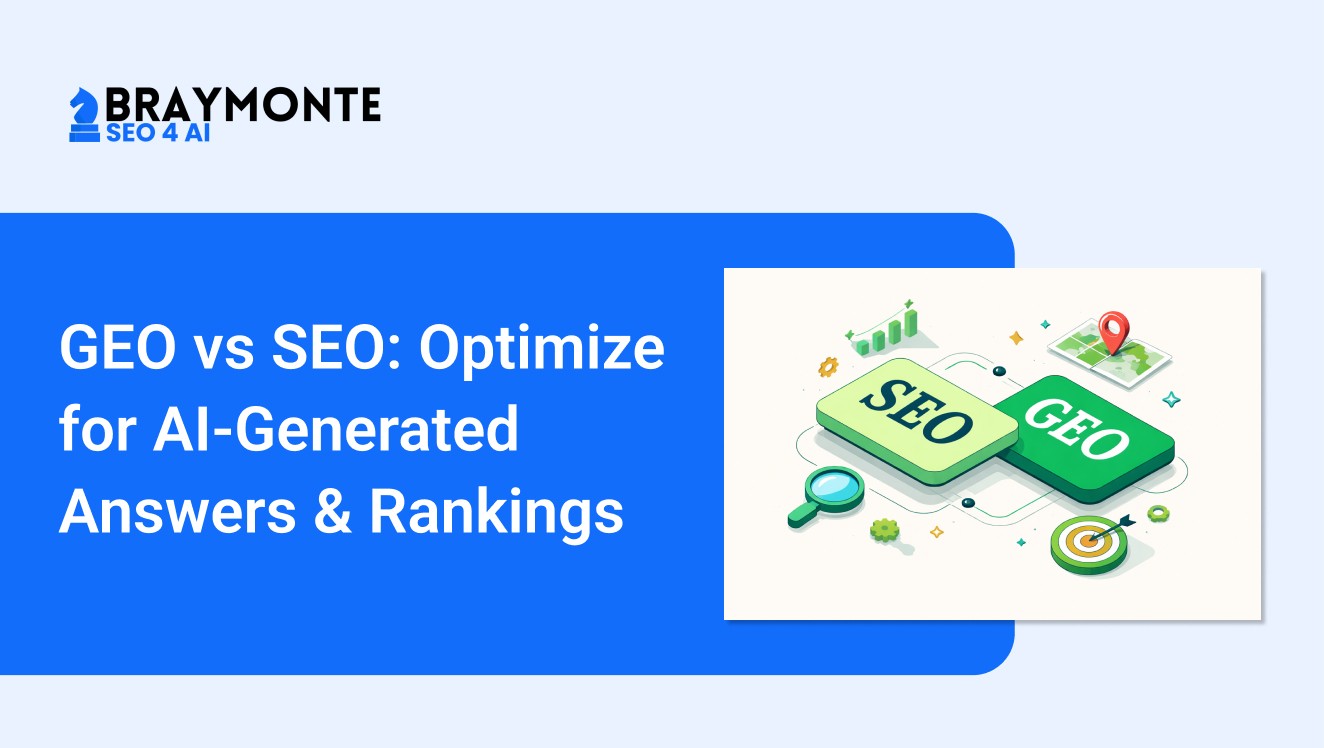
GEO (Generative Engine Optimization) and SEO (Search Engine Optimization) are both essential in 2026. While SEO focuses on rankings and traffic, GEO ensures your content appears in AI-generated answers. Combining both helps brands improve visibility across search engines and AI platforms.
What is Generative Engine Optimization (GEO)?
Generative Engine Optimization(GEO) is the practice of optimizing content so it can be understood, selected, and used in AI-generated answers. Instead of focusing only on rankings, GEO ensures your content is clear, structured, and accurate so AI tools can reference it. GEO = Optimization for AI answers, not just rankings.
Why GEO is Important Right Now
Search behavior is rapidly changing:
users rely more on AI-generated answers
zero-click searches are increasing
AI platforms summarize content instantly
This makes GEO a critical part of modern search strategy.
GEO vs SEO: Key Differences and Similarities
GEO vs SEO Key Similarities
both improve online visibility
both require high-quality content
both focus on user experience
both depend on trust and authority
SEO vs GEO Key Differences
Target Platform
SEO: search engines
GEO: AI platforms
Format
SEO: clickable results
GEO: direct answers
Focus
SEO: keywords
GEO: context and clarity
Goal
SEO: traffic
GEO: visibility in AI
Generative Engine Optimization vs Traditional SEO
The difference between generative engine optimization vs traditional SEO lies in how content is used. SEO helps users find your website. GEO helps AI use your content inside answers.
Which AI Engines Support GEO?
GEO applies to platforms like:
ChatGPT
Gemini
Perplexity AI
Claude
Copilot
These systems prefer structured, trustworthy, and well-written content.
Generative Engine Optimization Strategies
1. Create Complete Content
Cover topics fully and answer related questions.
2. Use Structured Format
Use headings, FAQs, and bullet points.
3. Write in Natural Language
Match how users ask questions like:
what is GEO
SEO vs GEO
geo SEO meaning
4. Add Authority Signals
Ensure accuracy, consistency, and trust.
5. Combine GEO with SEO
Use SEO for rankings and GEO for AI visibility.
Do I Need Both SEO and GEO for My Website?
Yes. SEO drives traffic. GEO ensures your content appears in AI-generated answers. Without GEO, you miss AI visibility. Without SEO, you lose traffic.
Which is More Important: SEO or GEO for Businesses?
Both are equally important. The best strategy is combining them to maximize reach across platforms.
Common Challenges with GEO
lower click-through rates
zero-click behavior
harder tracking
But it increases brand visibility and authority.
Traffic vs Visibility: Finding the Balance
SEO brings visitors. GEO builds presence in AI. A smart strategy balances both.
How AI Is Changing SEO
Modern search includes:
conversational queries
AI-generated summaries
intent-based results
This is why conversational SEO vs GEO is becoming important.
Boost Your SEO & GEO with SEO4AI
AI-driven search is evolving fast and most websites still miss key optimization signals like structured content, AI readability, and consistency. SEO4AI helps you fix that.With a free SEO + GEO audit, you can:
uncover hidden SEO gaps
improve rankings & AI visibility
align content with AI search trends
build stronger brand trust
A quick audit shows exactly what’s holding your site back and how to fix it.
Conclusion
GEO and SEO are not competing strategies they work together. SEO helps your content rank. GEO helps your content appear in AI answers. Businesses that adopt both will stay visible, relevant, and competitive in the future of search.
FAQs
What is GEO vs SEO?
GEO focuses on AI-generated answers, while SEO focuses on search rankings.
What is GEO in SEO?
GEO means optimizing content so AI platforms can understand and use it.
Is generative engine optimization the same as traditional SEO?
No, GEO targets AI systems while SEO targets search engines.
Do I need both SEO and GEO for my website?
Yes, combining both improves visibility across all platforms.
Latest posts
Discover other pieces of writing in our blog